
How to put on a thuja hedge? Are you at the garden design stage? Or maybe before or during the changes in the green space around the house? Do you dream of a green conifer fence that will give you some privacy? If so, you are certainly wondering what to do to make the thujas planted along the fence beautifully, the ground is exposing nicely and the grass does not overgrow.
But from the beginning :-) First of all, you should choose a species of conifers. If they are to be thuja, you have to consider whether the green fence should be compact, dense, protecting against wind, dust, noise, or partially obscuring, but at the same time giving some privacy.
Idealnie do “żywych płotów” sprawdzają się trzy gatunki iglaków:
– tuja brabant
– tuja gelderland
– tuja szmaragd
thuja brabant is a spreading, high shrub; After a few years, it reaches a height of 3-4 m. Ultimately, it is even about 10 m. With a rather loose, columnar or conical habit and short boughs. Its scales are light green in color, which only slightly darkens during the winter. The scaly needles grow quite densely on the slender, highly branched, flattened shoots. This variety has a tendency to create a large number of cones, which at first are soft and yellow-green, with time they become stiff and brown. Brabants are perfect for hedges, and their additional advantage is quick growth and resistance to low temperatures, winter winds, polluted, city air and pruning.
Tuja Gelderland is also a fast-growing tree with a compact habit, reaching up to 4 m in height after 10 years of cultivation. The twigs are flat, arranged opposite to the shoots, covered with strongly flattened, dark green and shiny scales. The tree requires fertile, moist, well-drained soils and sunny or semi-shaded positions. The variety is perfect for lanes or trimmed hedges in home gardens. Planting density every 0.6-0.8 m.
The emerald thuja is the most liked and most popular variety of thuja in gardens. Thanks to the elegant habit and beautiful color of the needles, it has gained a large group of lovers. The variety is characterized by a compact, regular and slightly conical habit and a beautiful, intensely green color of scales, which also persists in winter. An additional advantage of this variety is the production of a very small amount of small, almost invisible cones, which in the case of other thuja may appear on the shrub in great numbers, which reduces their decorative value. It is a fast-growing shrub, the annual increments of which reach even approx. 25-35 cm. After a few years, the plant may be approx. 2 m high; Ultimately, even approx. 8 m.
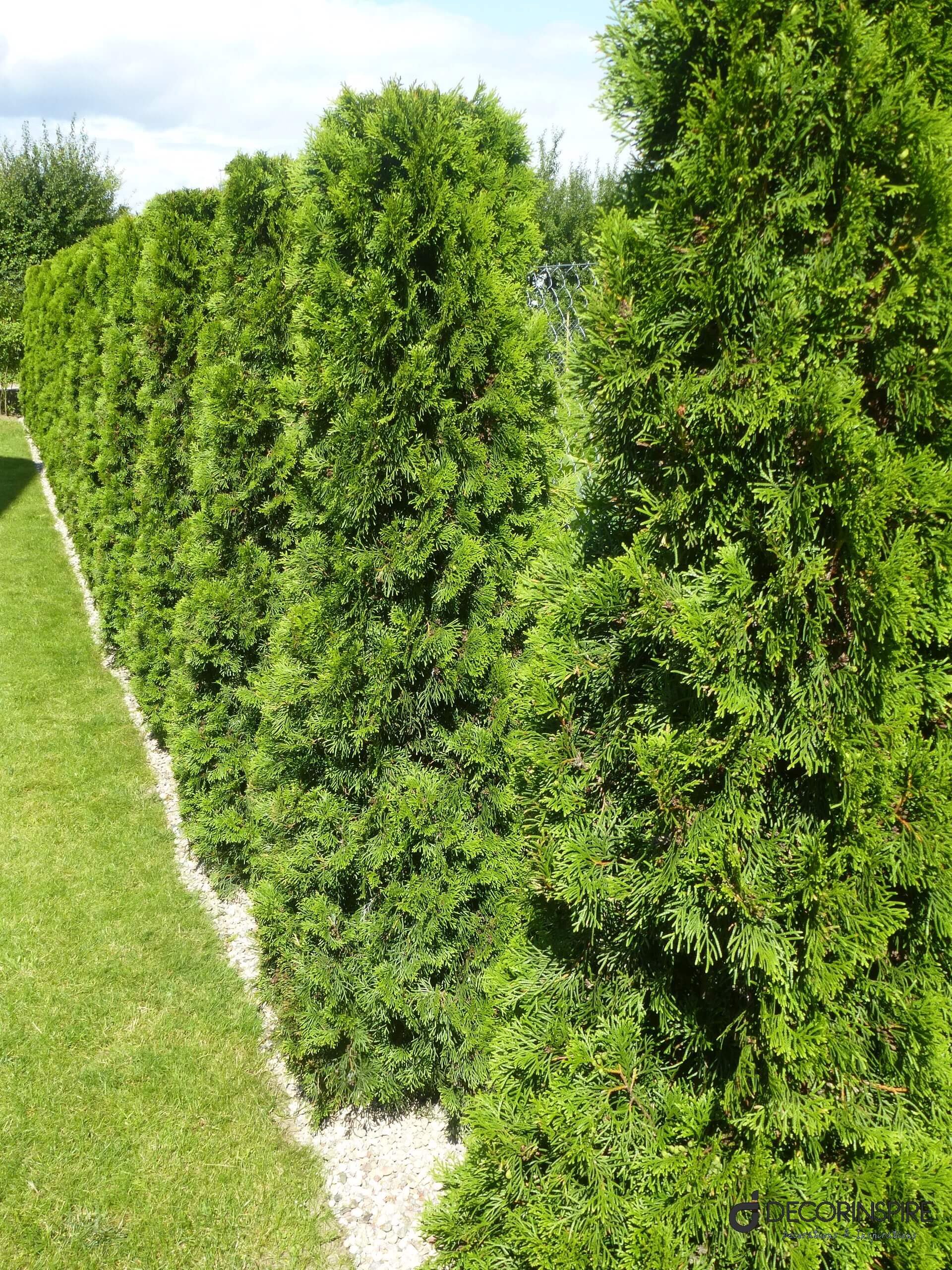
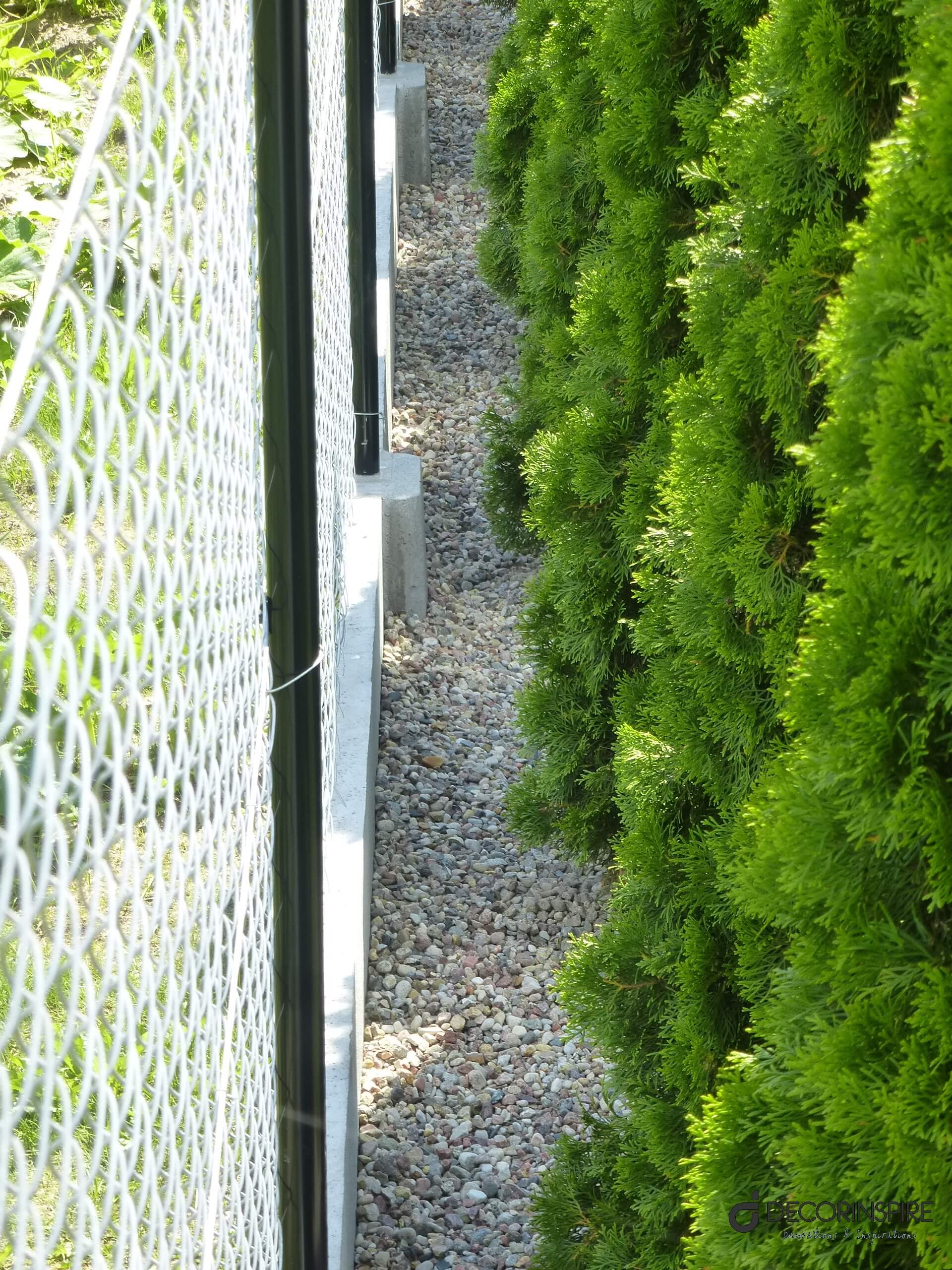
When we plant conifers, you need to remember to protect the space under the shrubs. It will protect against overgrowing grass, but also make it easier to work while mowing the lawn. In the first stage, you should buy agrotextile in a garden store. There are various types to buy, I suggest black, reinforced. Then it should be properly trimmed and placed throughout the space under and around the shrubs. The last step is to pour bark or other decorative material. In my opinion, the best solution in my opinion, and in addition to durable and modern, are ... stones. Various species, colors and sizes are currently available. I personally like small pebbles. Are you curious about the end result? Please, visit the gallery :-)





I'm pretty pleased to find this site. I really appreciate your effects and I am waiting for your further posts. Thanks!